
Root Canal & Endodontics • 8 min read
Root Canal Treatment Kanpur: Save Your Natural Tooth with Pain-Free Endodontic Care
When a severe toothache strikes, the words “root canal” can send shivers down anyone’s spine. But here’s the truth: root canal treatment in Kanpur has evolved into one of the most comfortable, predictable, and tooth-saving procedures in modern dentistry. At The Crown Dental Clinic, Dr. Priyanka Chaturvedi combines advanced endodontic training with state-of-the-art technology to deliver a pain-free root canal experience that not only eliminates your pain but preserves your natural tooth for life. If you’ve been delaying treatment out of fear, this comprehensive guide will change everything you thought you knew about root canal therapy.
What Is Root Canal Treatment? Understanding Endodontic Therapy
Root canal treatment, also known as endodontic therapy, is a dental procedure designed to remove infected or inflamed pulp from inside a tooth, clean and disinfect the root canal system, and seal it to prevent future infection. According to the American Association of Endodontists (AAE), over 14 million root canal procedures are performed every year, making it one of the most common and successful dental treatments worldwide with success rates exceeding 95%.
Inside every tooth, beneath the hard enamel and dentin layers, lies the pulp — a soft tissue containing blood vessels, nerves, and connective tissue. When deep decay, repeated dental procedures, cracks, or trauma damage this pulp, bacteria invade and cause inflammation or infection. Left untreated, this infection can spread to the surrounding bone, form an abscess, and ultimately lead to tooth loss. Root canal treatment removes this infected pulp, eliminates the bacterial invasion, and restores the tooth to full function.
The term “root canal” actually refers to the natural cavity within the tooth, not the procedure itself. The full name — endodontic therapy — comes from the Greek words “endo” (inside) and “odont” (tooth), perfectly describing a treatment that focuses on the interior of the tooth.
When Do You Need a Root Canal? Signs and Symptoms
Recognizing the signs that you may need a root canal treatment in Kanpur is critical for early intervention. The earlier the infection is caught, the higher the success rate and the more comfortable the procedure. Many patients are surprised to learn that sometimes there are no symptoms at all, which is why regular dental check-ups are essential.
- Severe, persistent toothache: A throbbing or sharp pain that worsens with pressure or while chewing is often the first and most telling sign of pulp damage.
- Prolonged sensitivity: If your tooth lingers in pain long after hot or cold foods and beverages are removed, the nerve inside may be irreversibly damaged.
- Gum swelling and tenderness: Swelling around the affected tooth, sometimes accompanied by a pimple-like abscess on the gums, indicates the infection has spread beyond the root.
- Tooth discoloration: A tooth that turns dark or grayish may signal that the pulp inside is dead or dying.
- Cracked or chipped tooth: Trauma that exposes the pulp chamber creates a direct pathway for bacteria to enter and cause infection.
If you experience any of these symptoms, it’s important to seek professional evaluation immediately. Delaying treatment can allow the infection to worsen, potentially leading to bone loss around the tooth root, systemic health complications, and the eventual need for extraction.

The Step-by-Step Root Canal Procedure at The Crown Dental Clinic
Understanding exactly what happens during a root canal treatment can dramatically reduce anxiety. The procedure is methodical, precise, and entirely focused on eliminating infection while preserving your natural tooth structure. Here’s a detailed breakdown of each step:
Diagnosis and Digital Imaging
The process begins with a thorough clinical examination and digital X-rays (or CBCT scans for complex cases) to precisely map the root canal anatomy, identify the extent of infection, and determine the number of canals that need treatment. Some teeth have surprisingly complex canal systems with multiple branches, and advanced imaging ensures nothing is missed.
Local Anesthesia and Isolation
Before any treatment begins, local anesthesia is administered to completely numb the tooth and surrounding area. A rubber dam (a thin, flexible sheet) is placed around the tooth to isolate it from saliva, keeping the treatment area sterile and preventing any bacteria from entering the canals during the procedure. This isolation also protects your airway and improves visibility for the endodontist.
Access Opening — Removing the Infected Pulp
A small opening is made through the crown of the tooth to access the pulp chamber. Using specialized instruments called endodontic files, the infected or dead pulp tissue is carefully removed from both the pulp chamber and the root canals. This step eliminates the source of pain and infection, which is why most patients report immediate relief after this stage.
Cleaning, Shaping, and Disinfecting the Canals
The root canals are meticulously cleaned and shaped using a series of progressively larger files. Modern rotary nickel-titanium instruments allow for efficient, gentle shaping that respects the natural curvature of the canals. Irrigation solutions (typically sodium hypochlorite and EDTA) flush out debris, dissolve remaining tissue, and kill bacteria. In some cases, antimicrobial medicaments are placed inside the canals between visits to ensure complete disinfection.
Filling and Sealing the Canals
Once the canals are thoroughly cleaned and shaped, they are filled with a biocompatible rubber-like material called gutta-percha. This material, combined with a sealing cement, completely fills the canal space to prevent future bacterial invasion. The access opening is then sealed with a temporary or permanent filling material.
Restoration with a Dental Crown
After root canal treatment, the tooth becomes more brittle because it no longer has a living blood supply. A custom dental crown is fabricated and placed over the treated tooth to protect it from fracture and restore full chewing function. The crown is color-matched to your natural teeth, making it virtually indistinguishable from your other teeth. This final restoration is what gives the tooth its strength and longevity for years to come.
Root Canal vs. Tooth Extraction: Why Saving Your Natural Tooth Matters
Many patients facing a severely infected tooth wonder whether extraction might be simpler or less expensive. However, the American Association of Endodontists strongly advocates for saving natural teeth whenever possible. A root canal treatment preserves your natural tooth root, which maintains the jawbone structure and prevents the bone loss that inevitably follows tooth extraction. Let’s compare the two options:
| Factor | Root Canal Treatment | Tooth Extraction + Implant |
|---|---|---|
| Tooth Preservation | Natural tooth root preserved — maintains bone and gum health | Natural tooth lost; bone grafting may be needed before implant |
| Success Rate | 95%+ success rate (AAE data) | 90-95% success rate for implants, but requires multiple surgeries |
| Treatment Time | 1-2 visits, typically 60-90 minutes each | Multiple visits over 3-6 months including healing time |
| Pain Level | Virtually pain-free with modern anesthesia | Extraction can be painful; implant surgery involves more recovery |
| Cost (Long-term) | Generally lower — one procedure plus crown | Higher — extraction + implant + abutment + crown |
| Bone Health | Root preserved; bone remains stimulated and healthy | Bone resorption begins immediately after extraction |
| Aesthetic Outcome | Your natural tooth with a protective crown — seamless appearance | Artificial tooth; gum recession around implant possible over time |
Root Canal Treatment Success Rates by Tooth Type
Source: American Association of Endodontists clinical outcome data
Why Modern Root Canal Treatment Is Virtually Painless
The myth that root canals are painful is one of the most persistent misconceptions in dentistry. The reality, backed by extensive research published by the British Endodontic Society and the AAE, is that modern root canal therapy is virtually painless and often provides immediate relief from the severe pain of an infected tooth. In fact, studies show that patients who have undergone root canal treatment report it as being six times more comfortable than they expected.
Several key advancements have transformed the root canal experience:
- ✓ Advanced Local Anesthesia: Modern anesthetic delivery systems, including computer-controlled devices like The Wand, provide precise, comfortable numbness. Buffering agents reduce the burning sensation traditionally associated with dental injections, making the experience much more pleasant.
- ✓ Rotary Nickel-Titanium Instruments: These flexible, motor-driven files navigate curved canals with unprecedented precision and gentleness, replacing the manual stainless-steel files of the past that were slower and more uncomfortable.
- ✓ Digital Imaging and CBCT: 3D cone beam computed tomography provides endodontists with a complete view of the tooth’s internal anatomy, eliminating guesswork and reducing treatment time.
- ✓ Laser-Assisted Disinfection: In 2024, laser technology is increasingly being used to enhance canal disinfection, killing bacteria in microscopic spaces that traditional irrigation may miss, improving outcomes and reducing post-operative sensitivity.
- ✓ Sedation Options: For anxious patients, nitrous oxide (laughing gas) and conscious sedation provide a calm, relaxed experience without full unconsciousness. Patient comfort is the top priority.
Post-treatment, it’s normal to experience mild sensitivity for a few days, which is easily managed with over-the-counter pain relievers. Most patients return to their normal activities the very next day. The British Endodontic Society confirms: “With the use of modern techniques, root canal therapy typically involves little or no discomfort.”

Pain Perception: Patient Expectations vs. Actual Experience
Based on published patient surveys from endodontic practices
Why Dr. Priyanka Chaturvedi Is the Right Endodontist for Your Root Canal Treatment in Kanpur
The success of a root canal treatment depends heavily on the skill and training of the person performing it. An endodontist is a dental specialist who has completed additional years of advanced training specifically focused on diagnosing and treating complex conditions inside the tooth. Choosing a qualified endodontist significantly increases treatment success rates and reduces the risk of complications.
Dr. Priyanka Chaturvedi
BDS — SRM University, Chennai | MDS — SPPGI, Lucknow
Endodontist & Aesthetic Dentist
Dr. Priyanka Chaturvedi brings exceptional expertise to every root canal procedure. Her BDS from SRM University, Chennai, provided a strong foundational education, while her MDS from SPPGI, Lucknow, gave her specialized advanced training in endodontics — the exact field that deals with root canal therapy. As a dedicated Endodontist and Aesthetic Dentist, she possesses the precise skills required to navigate complex root canal systems, manage even the most challenging cases, and restore your tooth with an aesthetically flawless crown. Her patient-centered approach ensures that every individual receives personalized care in a calm, reassuring environment where comfort is the top priority.
At The Crown Dental Clinic, Dr. Chaturvedi utilizes modern endodontic techniques including rotary instrumentation, digital imaging, and advanced irrigation protocols to ensure thorough cleaning and sealing of even the most complex canal systems. Her dual expertise in endodontics and aesthetic dentistry means your treated tooth will not only be healthy and functional but also visually indistinguishable from your natural smile.
Post-Treatment Care: What to Expect After Your Pain-Free Root Canal
Recovery after a root canal is remarkably straightforward. The procedure itself relieves the pain caused by the infection, and most patients feel significant improvement immediately. Here’s what to expect in the days following your treatment:
Days 1-2: You may experience mild tenderness around the treated tooth, especially when chewing. This is a normal inflammatory response as the tissues around the root heal. Over-the-counter pain medications like ibuprofen are typically sufficient. Avoid chewing hard foods on the treated side until the permanent crown is placed.
Days 3-7: Sensitivity gradually decreases. You can resume normal eating habits, though you should still avoid biting directly on the treated tooth if only a temporary filling is in place.
Long-term: Once the permanent crown is fitted, your tooth functions just like any other natural tooth. With proper oral hygiene — regular brushing, flossing, and dental check-ups — a root canal-treated tooth can last a lifetime. The AAE reports that teeth treated by endodontists have a success rate of over 95%, making it one of the most reliable procedures in all of dentistry.
“Root canal treatment doesn’t cause pain — it relieves it. The fear surrounding this procedure is outdated. With modern techniques and a skilled endodontist, saving your natural tooth is a comfortable, rewarding experience.”
Key Takeaways: Why Root Canal Treatment in Kanpur Is Your Best Choice
Choosing a pain-free root canal over extraction is one of the most important decisions you can make for your long-term oral health. Here’s why:
- ✓ Preserve your natural tooth: Nothing replaces the function and feel of your own tooth. Root canal treatment saves it.
- ✓ Virtually pain-free: Modern anesthesia and advanced technology make the procedure as comfortable as a routine filling.
- ✓ Immediate pain relief: The infected pulp causing your toothache is removed, providing instant relief.
- ✓ High success rate: Over 95% of root canal treatments are successful and can last a lifetime with proper care.
- ✓ Cost-effective long-term: Saving your tooth is generally less expensive than extraction followed by implants or bridges.
Experience Pain-Free Root Canal Treatment in Kanpur
Don’t let tooth pain control your life. Dr. Priyanka Chaturvedi at The Crown Dental Clinic is ready to provide expert, compassionate endodontic care that saves your natural tooth and eliminates your pain — comfortably.
Call Now: 087075 04822Schedule your consultation today and take the first step toward a pain-free smile.
Related Articles

Dental Implants Kanpur: The Permanent Solution for Missing Teeth
Dental Implants & Oral Surgery • 12 min read Dental Implants: The Permanent Solution for Missing Teeth A…
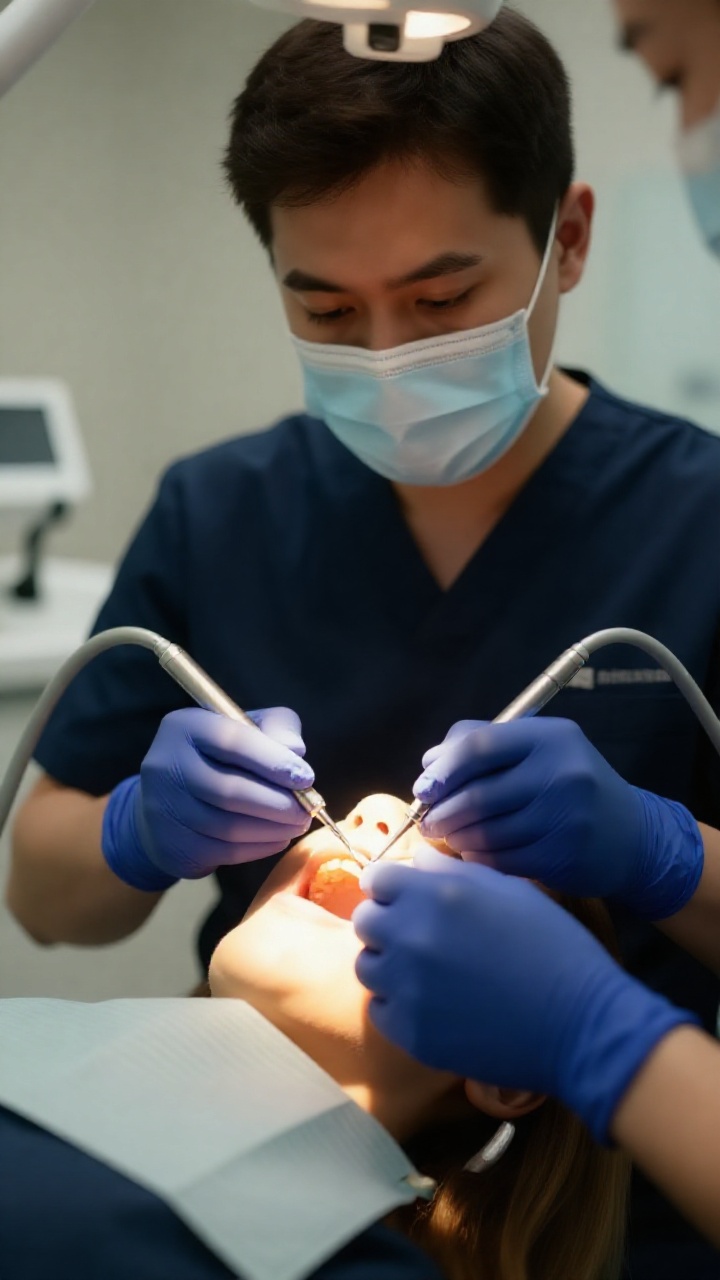
Root Canal Treatment Kanpur: Save Your Natural Tooth with Pain-Free Endodontic Care
Root Canal & Endodontics • 8 min read Root Canal Treatment Kanpur: Save Your Natural Tooth with Pain-Free…
Professional Teeth Whitening: Achieve a Brighter, More Confident Smile
Cosmetic Dentistry & Smile Design • 8 min read Professional Teeth Whitening: Achieve a Brighter, More Confident Smile…